

Now and then
For 10 years Legal Geek has been a major driver in lawtech’s transformation from a niche branch of enterprise tech to a well-funded global phenomenon. This is a personal reflection, as I’ve been involved in one way or another (participating and reporting) from early on. I attended the first London meet-ups and in March 2016 I was on the judging panel at Law for Good, Europe’s first lawtech hackathon, which Legal Geek organised with Hackney Community Law Centre in East London. East London is also home to The Truman Brewery in Brick Lane, the venue for Legal Geek’s flagship conference.
On 18 October 2016, the first Legal Geek start-up conference with its high-fives, speed networking sessions and ‘no ties’ rule brought the lawtech community together for the first time. Its aim was to make London a global hub for lawtech start-ups. It made lawtech cool, and its main themes have remained broadly the same across the years.
Same song
The first Legal Geek focused on artificial intelligence (AI), the international lawtech start-up scene, blockchain, innovation and cultural change, and lawtech investment (long before LawtechUK and the Legal Tech Fund). These are still the hot topics. The only area which slipped a little under the hype radar in 2025 is blockchain, but Sir Geoffrey Vos, the Master of the Rolls spoke about the International Jurisdiction Taskforce, which is focused on aligning the laws of different jurisdictions to facilitate transactions involving digital assets on chain. So it hasn’t disappeared. Rather it has moved from a concept that made sense but was difficult to envisage, to practical application in the form of self-executing smart contracts.
In 2016, talks included the perennial challenge of AI adoption, and we heard from AI start-ups including Kira Systems (acquired by Litera), RAVN (acquired by iManage), TrademarkNow (acquired by Corsearch), and legal engineering pioneer Wavelength Law (now Simmons Wavelength) as well as lawtech stalwarts that remain independent including ThoughtRiver, Juro and Clarilis. Support came from law firms, tech incubators and investors, which included venture capital firm Balderton Capital. The Legal Geek Startup map, which looked like a London tube map, became the go-to guide to UK lawtechs.
In 2017 Legal Geek was attracting participants from over 20 countries, and while there were now 40 start-ups in start-up alley, presentations were dominated by mainstream legal institutions and firms as well as vendors, investors and regulators. Magic circle firms were prominently involved. Allen & Overy (now A&O Shearman) had launched its lawtech incubator Fuse, and Slaughter and May backed legal AI pioneer Luminance (and is still an investor). A memorable presentation set the scene. Noah Waisberg of Kira Systems and Greg Wildisen of Neota Logic (which is still an independent company) talked about legal AI as the avocado toast of the legal sector: how putting together two familiar products – law and AI – had produced an incredibly popular new recipe. Legal tech was no longer niche; it was a movement, and a career, with more law graduates joining start-ups/becoming founders, and Legal Geek was trending on Twitter (now X). Social media was even hotter in 2025, with more LinkedIn influencers than ever, and even a workshop on amplifying your voice on LinkedIn.
By 2018 there were calls of ‘Bring back boring’ and predictions (remember all the predictions?) that now law had been ‘disrupted’ by technology, things would settle into a ‘new normal’. But Legal Geek didn’t do boring or normal. There were more start-ups than ever and more investors and incubators – legal specific ones led by law firms and vendors and mainstream options. The buzzwords were legal design, which was important as everyone was introducing chatbots, and we all got to build stuff with Lego. Another theme was intrapreneurship. Barclays Eagle Labs legal incubator was a brilliant example of this, as it repurposed banking premises. In 2018, I joined a women in lawtech panel, where we discussed the gender imbalance in the start-up world. Sadly, not much has changed there, as this year’s women in lawtech roundtable demonstrated.
A global community
2019 saw Legal Geek’s first international event in Brooklyn, and ThoughtRiver, Avvoka and Clarilis demonstrated their products at the British Consulate in New York. Legal Geek in London had grown into a major tech conference. The big topic was platformisation, tech platforms helping law firm access and manage the various point solutions emerging from the exponentially increasing number of lawtech start-ups. 2019 also saw the MoJ get involved, with the launch of Lawtech UK, initially delivered by Tech Nation and since 2023 part of Legal Geek’s remit.
While, like all in-person events, Legal Geek was impacted by the pandemic, the lockdowns accelerated tech adoption globally and firms and their clients moving IT systems to the cloud unknowingly set the scene for legal’s next leap of faith – into GenAI.
The come-back edition in 2022 was the first to feature a high-profile celebrity, Joe Wicks. Since then there have been keynote interviews with actor Richard E Grant, former Spice Girl Mel B and ‘national treasure’ Stephen Fry.
GenAI has been the hot topic since 2023, driving an explosion in lawtech investment which has funded massive acquisitions and created several unicorns, including agentic AI platforms Harvey and Legora, which both announced additional $150 million funding rounds last week (Harvey’s third raise this year) and are driving lawtech transformation globally.
The lawtech events space is crowded now, but Legal Geek has retained its fun vibe and its focus on connecting people. All start-ups need an exit plan – sell or scale – and Legal Geek has opted for both! As part of Law Business Research, it will have the bandwidth to expand, and it’s promised not to lose its magic.
ChatGPT is not your lawyer!
Last month OpenAI announced its contract analysis agent https://openai.com/index/openai-contract-data-agent/ and last week OpenAI published new usage policies that specifically excluded ‘provision of tailored advice that requires a license, such as legal or medical advice, without appropriate involvement by a licensed professional’ https://openai.com/en-GB/policies/usage-policies/. Obviously, these are not mutually exclusive, and while this has attracted media attention, OpenAI’s usage policies have not changed substantively, and read like a disclaimer. But they could also be interpreted as clarification that for now OpenAI doesn’t have the expertise to provide specialist advice, but this may change in future. For now at least, ChatGPT is not your lawyer!
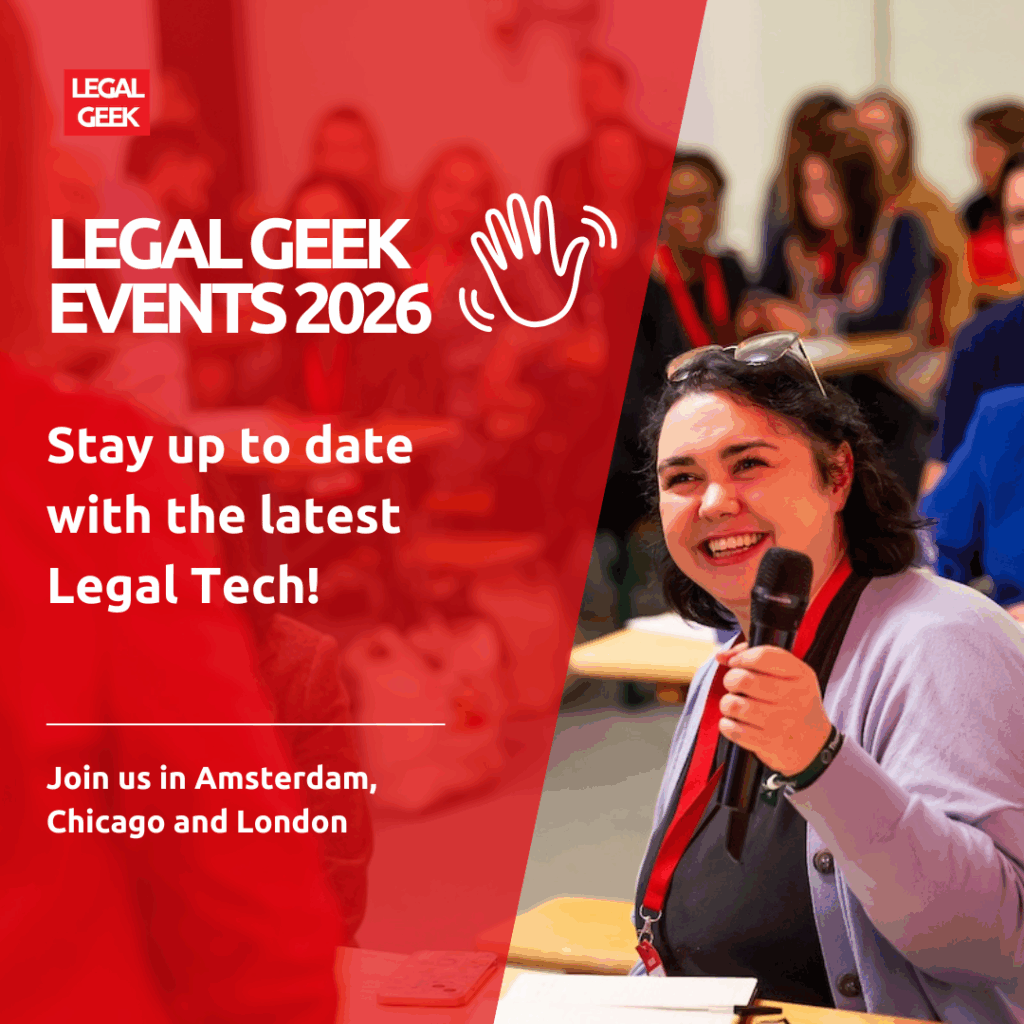
Legal Geek is hosting four conferences next year, learn more on our events page.

Written by Joanna Goodman, tech journalist
Photo credit (Joanna): Sam Mardon